

Why Surface Preparation Matters in Automotive Manufacturing
In the automotive industry, a car’s paint finish is more than just aesthetics, it protects the vehicle against corrosion, wear, and environmental damage. Yet, even the most advanced paints and coatings cannot deliver durability and brilliance without proper surface preparation. This is why phosphating has become an indispensable step in automotive production.
Phosphating creates a microcrystalline layer on the metal surface, dramatically improving paint adhesion and corrosion resistance. Without it, paint layers risk peeling, bubbling, or corroding prematurely, leading to warranty issues and reduced customer trust.
What is Phosphating?
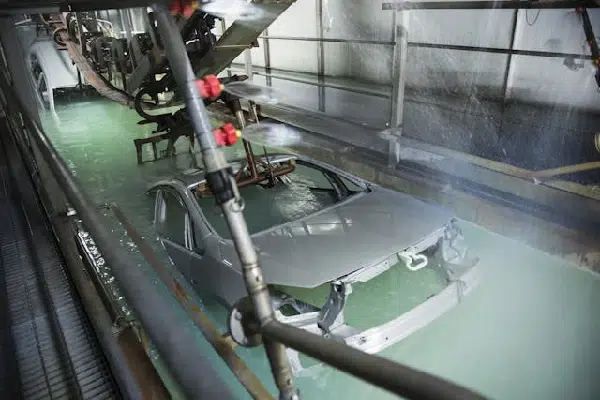
Phosphating is a chemical surface treatment where a metal component, usually steel or aluminum, is immersed in a phosphate solution. The process forms a crystalline phosphate coating that not only enhances adhesion but also provides an anti-corrosive base layer.
This treatment ensures that when paint or powder coating is applied, it bonds strongly and uniformly to the surface. Phosphating also helps absorb lubricants in subsequent processes like forming, offering dual functionality.
Why Automobiles Depend on Phosphating
Automobiles are constantly exposed to harsh conditions: road salts, humidity, UV radiation, and varying temperatures. The quality of the pre-paint surface preparation directly determines how well a vehicle withstands these stresses. Phosphating delivers several key benefits:
- Superior Paint Adhesion: Provides a uniform base layer that locks in paint and prevents peeling.
- Corrosion Resistance: Forms a protective layer that slows down rust formation, especially in hidden cavities and joints.
- Surface Uniformity: Smoothens micro-defects, ensuring even paint coverage and a flawless final appearance.
- Enhanced Durability: Extends the service life of painted parts, reducing long-term maintenance and warranty claims.
Types of Phosphating in Automotive Applications
- Zinc Phosphating – The most widely used in automotive production, offering excellent corrosion resistance and high paint adhesion.
- Iron Phosphating – A cost-effective alternative often used for interior components where corrosion risks are lower.
- Manganese Phosphating – Commonly used for wear resistance in engine parts and critical mechanical assemblies.
The Role of Surface Preparation Plants
Scaling phosphating to the high-volume demands of the automotive industry requires advanced surface preparation plants. These plants integrate multiple stages, including:
- Degreasing and Cleaning: Removing oils, greases, and residues that interfere with coating.
- Pickling: Treating the surface to remove rust and oxides before phosphating.
- Phosphating Tanks: Applying the phosphate conversion coating under tightly controlled conditions.
- Rinsing and Drying: Ensuring contaminants are removed and surfaces are fully ready for painting.
Modern plants incorporate automation, inline conveyors, and real-time monitoring to guarantee consistent treatment across thousands of components per day, ensuring scalability without sacrificing quality.
Automotive Applications of Phosphating
- Body Panels: Ensures paint durability on visible surfaces subject to weathering.
- Chassis Components: Provides corrosion protection for structural parts exposed to road debris and salts.
- Engine and Transmission Parts: Prepares surfaces for coatings and lubricants to improve performance and longevity.
- Fasteners and Small Parts: Prevents corrosion and supports consistent finishes in high-stress areas.
The Future of Phosphating in Automotive Production
With rising environmental regulations and sustainability demands, the industry is moving toward low-zinc and zinc-free phosphating systems that reduce sludge generation and chemical usage. Additionally, nano-ceramic pretreatments are being integrated with phosphating lines to further enhance adhesion while minimizing environmental impact.
Conclusion
Phosphating is the hidden foundation of every durable, glossy, and corrosion-resistant automotive finish. By investing in advanced surface preparation plants, manufacturers ensure that every layer of paint not only looks flawless but also withstands the toughest conditions over a vehicle’s lifetime.
For automakers, the secret to better paint adhesion is clear: it begins long before the paint is applied, with precision-engineered phosphating systems.
Looking to optimize your automotive surface preparation process? Connect with our experts today.

